









































Unlocking Creativity with Free AI Tools for Multimedia Content Creation
.
Introduction
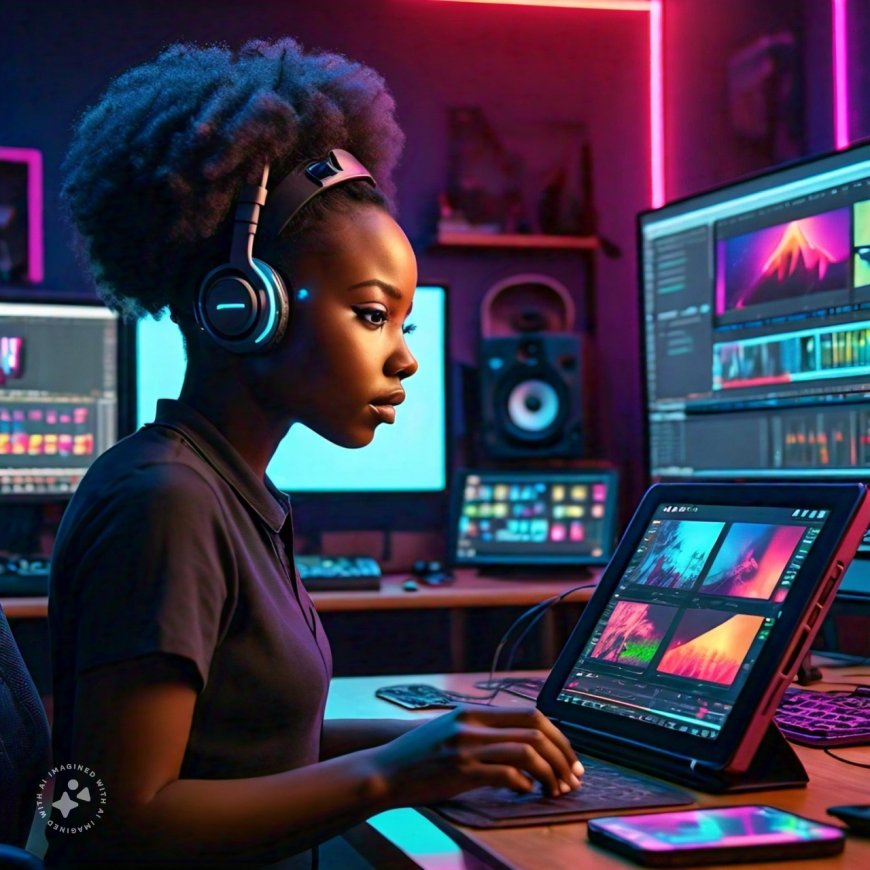
In today's digital landscape, multimedia content stands at the forefront of communication, serving as a dynamic medium to engage and captivate audiences across various platforms. Yet, for many aspiring creators and seasoned professionals alike, the journey of content creation often presents daunting challenges, from mastering intricate software to navigating complex workflows. However, amidst this landscape of creative exploration, a transformative force has emerged: free artificial intelligence (AI) tools. These tools, powered by cutting-edge AI technologies, have revolutionized the creative process, democratizing access to sophisticated tools once reserved for industry elites. In this article, we embark on a journey through the realm of multimedia content creation, exploring a myriad of free AI tools that empower individuals to unleash their creativity and bring their visions to life.
AI Language Models (LLMs)

AI language models, such as ChatGPT-4, Gemini, Claude, LLaMA (Meta), Copilot, and Perplexity, have significantly impacted content creation. These models can generate human-like text, assist in writing, and provide creative ideas, enhancing the overall quality of written content.
- ChatGPT-4: Developed by OpenAI, ChatGPT-4 is a versatile language model that can generate coherent and contextually relevant text based on given prompts. It can assist in writing articles, creating marketing copy, brainstorming ideas, and even composing poetry or stories. Its ability to understand and generate natural language makes it a valuable tool for content creators.
- Gemini: Gemini is designed to provide advanced natural language understanding and generation capabilities. It is particularly useful for content generation, summarization, and complex language tasks, making it a robust tool for enhancing written content.
- Claude: Claude excels in generating natural, human-like text for a variety of applications, from conversational agents to content creation. Its advanced language processing capabilities allow for accurate and contextually appropriate text generation.
- LLaMA (Meta): LLaMA, developed by Meta, focuses on language understanding and generation. It is useful for creating detailed and contextually rich content, supporting tasks like writing assistance, content summarization, and language translation.
- Copilot: Copilot, a collaboration between GitHub and OpenAI, is designed to assist developers by generating code snippets and offering programming solutions. Its capabilities extend to content creation, providing technical writing support and documentation generation.
- Perplexity: Perplexity is known for its ability to generate high-quality, contextually relevant text. It is useful for content creation, including articles, stories, and marketing materials, by understanding and predicting language patterns effectively.
AI Text-to-Speech (TTS) Creators

Text-to-speech technology has advanced significantly, with AI-driven tools like Google Text-to-Speech, Amazon Polly, IBM Watson Text to Speech, Canva, Natural Reader, Balabolka, WordTalk, and Zabaware offering natural and expressive speech synthesis.
- Google Text-to-Speech: Google Text-to-Speech tool uses DeepMind’s WaveNet technology to produce high-fidelity speech. It supports multiple languages and accents, making it a versatile option for global content creators. The AI can also adjust pitch, speed, and volume to enhance the listening experience.
- Canva: Canva’s text-to-speech feature allows users to convert written text into spoken words, enhancing multimedia presentations and videos. It offers various voice options and customization features.
- Natural Reader: Natural Reader converts written text into natural-sounding speech. It supports multiple languages and voices, providing a user-friendly interface for creating audio content.
- Balabolka: Balabolka is a versatile text-to-speech tool that supports various file formats and offers customizable voice settings. It is particularly useful for creating audiobooks and presentations.
- WordTalk: WordTalk is an add-in for Microsoft Word that converts text into speech. It provides an easy way to create spoken versions of written documents, making it accessible for users with different needs.
- Zabaware: Zabaware Text-to-Speech Reader offers natural voice synthesis for converting written text into spoken words. It is useful for creating audio versions of documents, articles, and web content.
AI Image Generators

Creating realistic images from text descriptions or enhancing existing images is made possible with AI image generators like DALL-E, DeepArt, RunwayML, Facebook Meta, Firefly, and Leonardo.
- Facebook Meta: Meta AI includes advanced image generation capabilities. These tools can create detailed and realistic images from text descriptions, useful for a wide range of creative and commercial applications.
- Firefly: Adobe Firefly is an AI image generator that creates high-quality visuals from textual inputs. It is designed to produce detailed and creative images, making it ideal for marketing, design, and artistic projects.
- Leonardo: Leonardo.AI specializes in generating and editing images. Its capabilities include creating photorealistic images and enhancing existing photos, providing a versatile solution for visual content creation.
- RunwayML: RunwayML offers various AI tools for creative projects, including image generation and editing. Its AI-powered image generators can create stunning visuals from scratch or enhance existing images by adding elements, changing backgrounds, and more.
- MidJourney: MidJourney is known for generating high-quality, imaginative images from text prompts. It is widely used by artists, designers, and content creators to produce unique and creative visuals for various projects.
- DALL-E: Developed by OpenAI, DALL-E generates images from textual descriptions. It can create entirely new images or modify existing ones based on detailed prompts. This tool is useful for generating unique visuals for articles, social media, and advertising campaigns.
- DeepArt: DeepArt uses neural networks to turn photos into artworks inspired by the styles of famous artists. Users can upload a photo and select an art style, and the AI will transform the image, making it look like a painting by Van Gogh, Picasso, or other artists.
AI Tools for Graphic Creation

Creating visually appealing graphics can be time-consuming and requires a certain level of skill. AI tools like Canva, Adobe Spark, and Crello are democratizing graphic design, making it accessible to everyone, regardless of their design expertise.
- Canva: Canva uses AI to offer design suggestions, templates, and tools that help users create professional-quality graphics for social media, presentations, posters, and more. Its intuitive drag-and-drop interface, combined with a vast library of templates and elements, makes graphic design straightforward and efficient.
- Adobe Spark: Adobe Spark leverages AI to simplify the design process. It offers pre-designed templates, automatic text alignment, and a vast collection of stock photos and icons. The AI also helps in suggesting color schemes and fonts that complement each other, ensuring a polished final product.
- Crello: Crello provides an array of templates and design elements. Its AI-driven features include automated background removal and one-click resizing for different social media formats, enhancing user productivity.
AI Tools for Music Creation

Creating original music traditionally requires extensive knowledge of music theory and composition. AI tools like Amper Music, AIVA, and Jukedeck are changing the landscape by enabling users to generate unique music tracks with minimal effort. Additionally, tools like Suno, Audio, Stable Audio, and Pika are pushing the boundaries of audio generation.
- Suno: Suno AI provides AI-driven music composition and sound design tools. It allows users to generate original music and soundscapes for various applications, from films to video games.
- Udio: Udio leverages AI to create customizable music tracks for multimedia projects. Users can specify preferences such as genre, tempo, and mood to generate personalized music that enhances their content.
- Stable Audio: Stable Audio focuses on generating high-quality music and sound effects using AI. It is designed for creators looking to add professional-grade audio to their projects.
- Pika: Pika offers AI-powered tools for music composition and audio editing. Its features include generating music tracks, enhancing audio quality, and creating sound effects.
- AIVA (Artificial Intelligence Virtual Artist): AIVA specializes in composing classical and symphonic music. It is used by musicians and filmmakers to generate original compositions that evoke specific emotions. AIVA's AI has been trained on a vast database of classical music, allowing it to create sophisticated and intricate pieces.
AI Video Production Tools

Video content is a powerful medium for storytelling and engagement. AI tools like Pictory, Magisto, and Animoto are transforming video production by automating editing processes and enhancing creativity. For more advanced video creation, tools like Imensity AI and Pika Art offer sophisticated capabilities, while video editing tools like Canva and Final Cut streamline the editing process.
- Imensity AI: Imensity AI offers advanced video production capabilities, including automated video creation from text prompts and sophisticated editing features. It is designed for professional-grade video content.
- Pika Art: Pika Art provides AI-driven video production tools that enable users to create high-quality videos with minimal effort. Its features include automated editing, visual effects, and content generation.
- Canva: Canva Video Editor allows users to create and edit videos with ease. It offers a range of templates, effects, and audio options, making video production accessible to non-professionals.
- Final Cut: Final Cut Pro is a professional video editing software that leverages AI to enhance editing capabilities. Its features include automated color correction, scene detection, and intelligent editing suggestions.
- Magisto: Magisto employs AI to analyze raw video footage and edit it into a polished final product. It identifies the best parts of the footage, applies suitable transitions, and syncs the video with music to create engaging content. This tool is ideal for marketers and content creators looking to produce professional videos quickly.
- Animoto: Animoto provides an easy-to-use platform for creating videos with the help of AI. Users can choose from various templates, and the AI will assist in arranging clips, adding effects, and syncing music. It simplifies video production for social media, marketing, and personal projects.
.
Conclusion
The advent of free AI tools has revolutionized multimedia content creation, offering accessibility and versatility to creators of all backgrounds. From advanced language models to intuitive text-to-speech creators, and from innovative image generators to cutting-edge music creation platforms, these tools empower individuals to unleash their creativity without barriers. As we witness the ongoing evolution of AI technology, these tools will continue to push the boundaries of multimedia content creation, enabling creators to craft captivating experiences that resonate with audiences worldwide. Embracing these free AI tools is not just about streamlining the creative process; it's about unlocking limitless possibilities and shaping the future of digital storytelling.
What's Your Reaction?












![Watch: The Butterfly Circus [Short Film] featuring Nick Vujicic](https://blog.elfglobal.org/uploads/images/202405/image_140x98_6654b9bc76b8e.jpg)