

























































How Human Memory Works — and How You Can Learn Faster
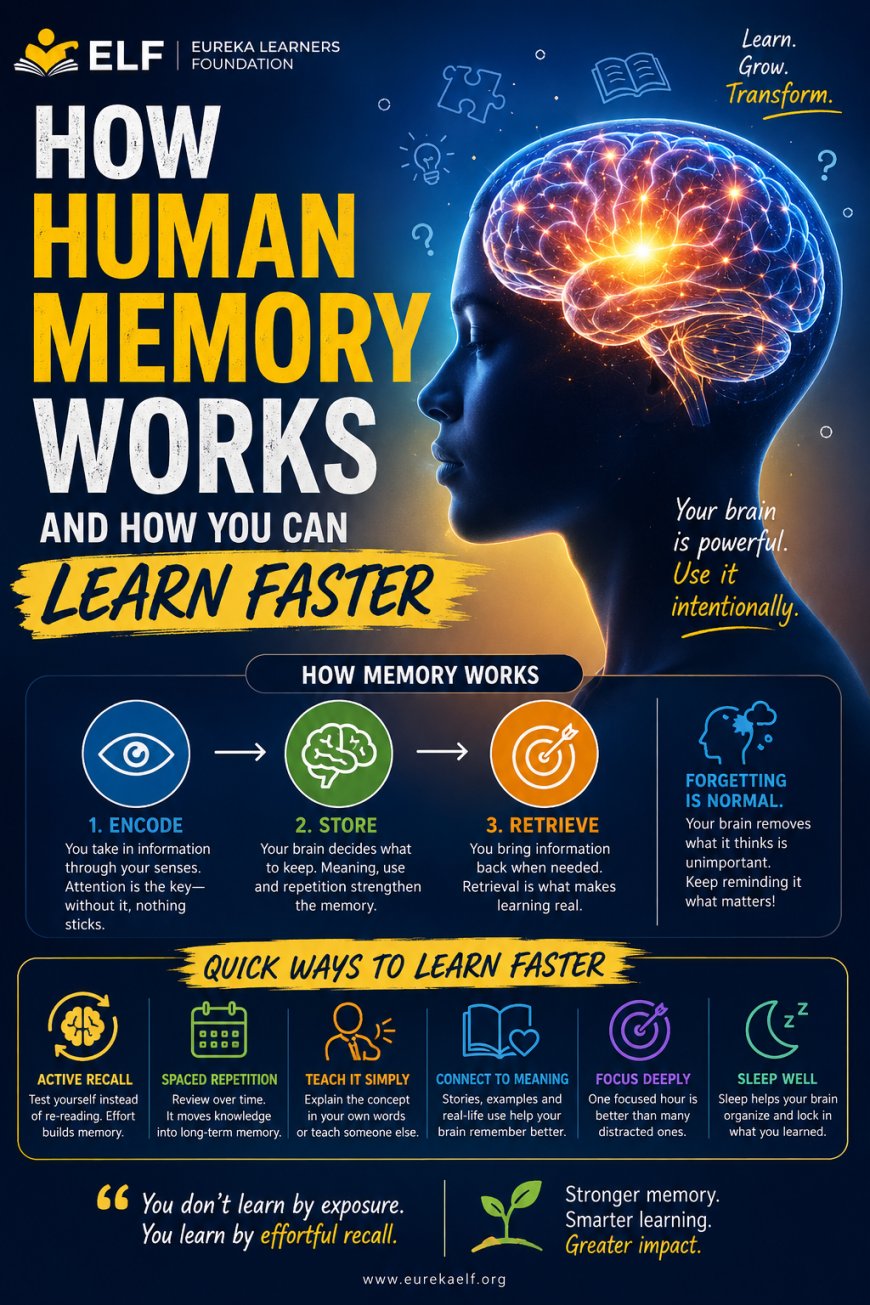
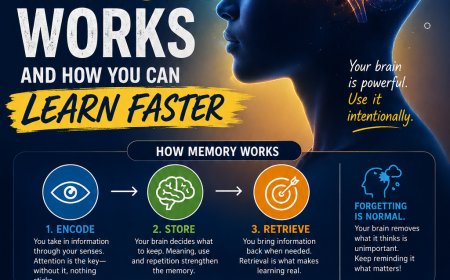
Human memory is not a fixed storage system like a phone or computer. It is a living process in the brain that becomes stronger the more you use it. Understanding how it works can completely change how quickly and effectively you learn.
At its simplest, memory works in three stages: you take in information, your brain decides what to keep, and later you bring it back when needed. What most people don’t realize is that learning does not really happen when you are reading or listening—it happens when you try to remember.
The brain pays attention first. If your focus is weak, the information barely enters memory at all. After that, the brain decides what is important enough to store. If something feels useful, meaningful, or repeated, it gets strengthened. Finally, retrieval happens when you try to recall what you learned. This last stage is where true learning is built.
Forgetting is also part of the system. The brain naturally removes information it thinks is not important. So the goal of learning is not just to “study,” but to keep reminding the brain that something matters.
How to Learn Faster
To make learning easier and faster, you don’t need more hours—you need better methods. A few simple techniques make a big difference:
- Active recall: Instead of rereading notes, close them and try to remember what you just learned. Even struggling to recall strengthens your memory.
- Spaced repetition: Review what you learn over time—today, then a few days later, then a week later. This tells the brain to store it long-term.
- Teach it simply: If you can explain a concept in simple words to someone else, you truly understand it. If not, you still need to work on it.
- Connect to meaning: Your brain remembers stories, examples, and real-life situations better than isolated facts.
- Focus deeply: Avoid multitasking when learning. One focused session is far more powerful than several distracted ones.
- Sleep well: Sleep helps the brain organize and lock in what you learned during the day.
The Key Idea
Learning is not about how many times you see something. It is about how often your brain is forced to use that information.
When you actively recall, revisit over time, and connect ideas to meaning, your brain builds stronger pathways. That is how learning becomes faster and memory becomes stronger.
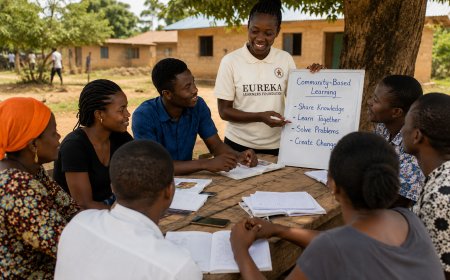
For education-focused organizations like Eureka Learners Foundation, this approach is important because it helps learners move from memorization to real understanding—and from passive learning to active thinking.
In the end, memory is not something you either have or don’t have. It is something you train.
What's Your Reaction?












![Watch: The Butterfly Circus [Short Film] featuring Nick Vujicic](https://blog.elfglobal.org/uploads/images/202405/image_140x98_6654b9bc76b8e.jpg)